Glass Fiber Tubes About
Glass Fiber Tubes
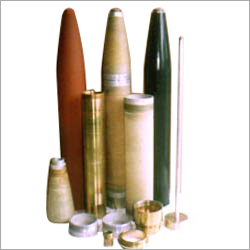
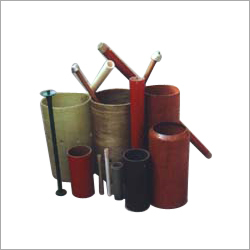
Our firm has attained a respectable position in this domain by steadily manufacturing and exporting a qualitative range of Glass Fiber Tubes. These tubes are manufactured at our well equipped production unit by making use of optimum quality glass fibers with the incorporation of supreme grade polyester, epoxy, phenolic and other customized resin systems. Various sizes, shapes, diameters and specifications can be accessed by our clients in our offered assortment of tubes. The Glass Fiber Tubes are suitably utilized in various industries like telecommunications and automotive industries.
Key Features:
Further Details:
We manufacture a premium quality range of Glass Fiber Tubes that is integrated with epoxy polyester, phenolic and other modified resin systems. Glass Fiber/ Filament Wound & vacuum molded tubes are available with components like EDF tube, resistor tube, and arc chamber tube. These find application in MOCB & SF breakers upto 400 KV.
Advanced Manufacturing for Reliable PerformanceGlass Fiber Tubes utilize pultrusion and filament winding processes to ensure consistent structure and precision. The advanced manufacturing delivers high mechanical strength while maintaining lightweight properties, essential for modern industrial requirements. Each tube undergoes surface treatments for durability, including solvent cleaning and smooth finishes.
Versatile Applications Across IndustriesThese tubes serve as core components in a range of industries, including electrical, electronics, aerospace, and automotive. Their adaptability in cable protection, electrical insulation, and structural support makes them a preferred choice for engineers and designers seeking efficient and safe solutions.
FAQs of Glass Fiber Tubes:
Q: How are glass fiber tubes manufactured, and what advantages do pultrusion and filament winding offer?
A: Glass fiber tubes are produced using pultrusion and filament winding techniques, which provide consistent quality, precise dimensions, and high mechanical strength. Pultrusion allows continuous manufacture of tubes of custom lengths, while filament winding ensures optimal wall thickness and structural integrity.
Q: What applications are most suitable for glass fiber tubes?
A: These tubes are ideal for electrical insulation, cable protection, and structural support in industries such as electrical, electronics, aerospace, construction, and automotive, where both performance and safety are critical.
Q: When should epoxy or polyester coatings be selected for glass fiber tubes?
A: Epoxy coatings are recommended for applications needing superior chemical resistance and electrical insulation, while polyester coatings suit environments requiring enhanced weatherability and UV protection. The coating type should be chosen based on specific operational requirements.
Q: Where can custom-sized glass fiber tubes be sourced in India?
A: Major exporters, manufacturers, and suppliers across India offer custom or standard glass fiber tubes, providing a selection of diameters (5mm100mm), thicknesses (110mm), and lengths (1m3m) to fit diverse project needs.
Q: What is the process for solvent cleaning and smooth finishing of glass fiber tubes?
A: Tubes are cleaned with solvents post-production to remove any manufacturing residues, then finished to a smooth surface. This process enhances product appearance and ensures optimal performance in insulation and structural applications.
Q: How does low thermal conductivity benefit the usage of glass fiber tubes?
A: With thermal conductivity values ranging from 0.034 to 0.040 W/(mK), glass fiber tubes limit heat transfer, making them excellent choices for electrical insulation and applications where thermal management is essential.
Q: What are the typical GSM and thickness specifications of glass fiber tubes?
A: GSM typically ranges from 300 to 600, depending on the wall thickness and diameter, while the standard tube thickness is 1mm to 10mm, allowing users to select products tailored to their required strength and insulation properties.






 Send Inquiry


 Send Inquiry